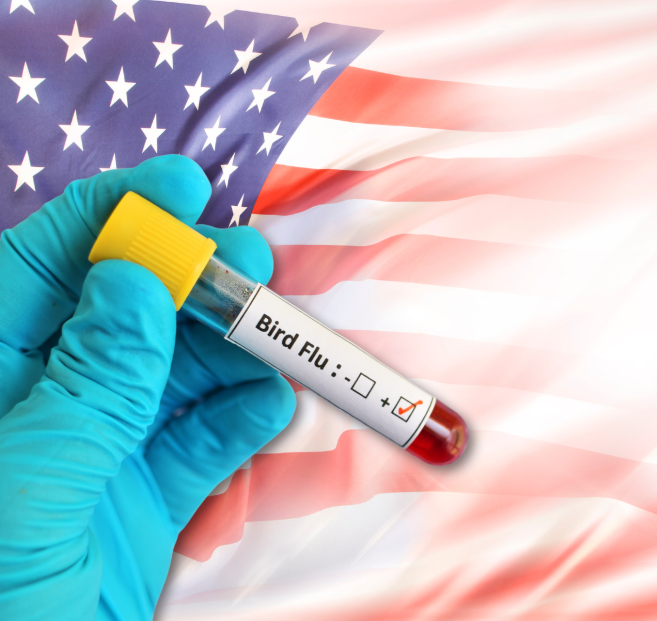
As of 20 March 2025, the US is authorised to self-impose and self-lift regional trade restrictions in response to bird flu outbreaks.
This trial process bypasses the need for South Africa to formally issue or lift restrictions on each affected state.
Instead, real-time status updates will now be reflected on the E-cert dashboard, enabling importers and retailers to quickly adapt to changes without waiting for official correspondence.
The goal is to minimise delays, support trade continuity, and shield consumers from the price volatility often triggered by sudden supply disruptions.
South Africa’s decision to allow the United States to self-manage bird flu-related trade restrictions has drawn criticism from the South African Poultry Association (SAPA), which argues that the move compromises local biosecurity.
But in a global context marked by widespread avian influenza outbreaks and volatile protein supplies, the concession presents less a gamble and more a pragmatic necessity.
The approach is supported by several significant factors:
No compromise on food safety
Critically, this flexibility does not compromise food safety standards.
The U.S. will continue to uphold all South African import protocols as per their bilateral agreements.
Although the World Organisation for Animal Health (WOAH) permits lifting restrictions after 28 days, the U.S. has committed to maintaining the more stringent 90-day waiting period previously agreed upon with South Africa.
“The U.S. will still follow all South African protocols. There is no compromise on food safety standards,” reiterated a USA Poultry & Egg Export Council official. “This is not a shortcut. It’s about improving efficiency.”
The change, formalised by Dr Mpho Maja, Director of Animal Health, reflects a spirit of policy innovation rooted in science, trust, and shared accountability.
The USA Poultry & Egg Export Council has commended Dr Maja and the Department of Agriculture for their dedicated efforts in bringing this trial agreement to fruition, recognising the challenges along the way.
It is important to clarify that the concession does not grant carte blanche; rather, it brings South Africa’s import policy in line with a more agile approach—one that, if successful, could serve as a model for international best practice.
Bird flu is now endemic globally
SAPA’s argument hinges on the idea that the US cannot be trusted to manage its own disease status.
But with HPAI (Highly Pathogenic Avian Influenza) now entrenched in wild bird populations across continents, no country is immune.
South Africa itself has recently reported new cases, underscoring that biosecurity risks are not exclusive to imports.
The US follows World Organisation for Animal Health (WOAH) protocols and has a track record of transparent disease reporting.
However, not all US states are eligible for import. As of July 2025, poultry and poultry products may not be imported from the following 27 regions due to ongoing HPAI concerns:
Current Restricted USA States |
|
| Arizona | Montana |
| Arkansas | New Jersey |
| California | New Mexico |
| Colorado | New York |
| Delaware | North Carolina |
| Florida | North Dakota |
| Illinois | Ohio |
| Indiana | Oregon |
| Iowa | Pennsylvania |
| Kansas | Puerto Rico |
| Maryland | South Dakota |
| Michigan | Virginia |
| Minnesota | Wisconsin |
| Mississippi | |
This list will be updated dynamically on the E-cert system, and the provisional concession will be reassessed after 12 months.
Global poultry supply is under strain
The US and Brazil, two major global poultry suppliers, have both faced disruptive HPAI outbreaks.
After two-month halt in trade from Brazil, South Africa’s Department of Agriculture, Land Reform and Rural Development (DALRRD) recently reopened import permits for poultry from Brazil on 4 July 2025.
While DALRRD moved to a regionalised protocol on 19 June, it took a further two weeks of negotiation between Brazilian and South African authorities to finalise an updated Veterinary Health Certificate (VHC).
Meanwhile, Brazil was officially declared free of avian influenza as of 26 June.
The recent disruption in Brazil imports highlights the importance of efficient access to alternative markets, fostering resilient trade relationships, and mitigating local poultry shortages.
Closing the gap
South African poultry producers are currently unable to meet the nation’s total chicken demand.
Therefore, imports of mechanically deboned meat (MDM), offals, and bone-in cuts such as chicken wings remain necessary to satisfy local requirements.
Delayed access to imported poultry has direct consequences for affordability and nutrition, especially for low-income households. In the absence of alternatives, prices rise, and families go without.
Imported poultry supports not only food security but also contributes significantly to employment and overall economic growth.
As South Africa continues to navigate poultry price pressures, disease outbreaks, and import bottlenecks, the concession may be a necessary strategic adjustment which prioritises food safety and food security for South Africans.