As of 1 July, South Africa has reported two new bird flu outbreaks to the World Organisation for Animal Health (WOAH)—one on a poultry farm in North West province and another in Mpumalanga.
This development is especially concerning given that the country is already experiencing local poultry shortages from embattled Daybreak Farms, compounded by ongoing challenges in reopening poultry imports from Brazil.
Despite longstanding efforts by the local poultry industry to secure government approval for bird flu immunisation, the emergence of these two new farm infections may suggest that progress has come too late to prevent further trouble.
First Rollout of Bird Flu Vaccinations
In a significant development, Astral Foods has received government approval to begin vaccinating its broiler breeding stock against the H5 strain of bird flu.
This follows the Department of Agriculture’s issuance of a vaccination permit to Astral, allowing the company to begin vaccinating at one of its broiler breeder farms.
The R35 million vaccination campaign will start with 200,000 broiler breeders, about 5% of Astral’s breeding stock.
The vaccine, already used in other countries, will be administered under strict veterinary supervision and biosecurity protocols.
While this is a positive step, the vaccine does not protect against the H7 strain—the variant responsible for South Africa’s catastrophic outbreak in 2023.
A locally developed H7 vaccine is still pending registration, leaving the industry partially exposed to future outbreaks.
South Africa Still Not HPAI-Free
Despite these efforts, South Africa remains classified as HPAI-positive in WOAH’s latest follow up report issued on 18 June.
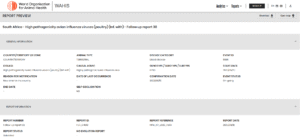
For updates on South Africa’s HPAI status, visit WOAH’s official site.
This status limits the country’s ability to export poultry and delays the reopening of key international markets.
Meanwhile, several countries have self-declared themselves free of bird flu and are awaiting South Africa’s Department of Agriculture to lift import restrictions. These include:
- France (declared free on 11 February 2025)
- Belgium and Denmark (both on 23 May 2025)
- Netherlands (3 June 2025)
- Brazil and Poland (both on 26 June 2025)
Spotlight on Brazil: A Critical Trade Partner
Brazil, the world’s largest poultry exporter, is especially vital to South Africa’s food security.
Although Brazil has officially regained its bird flu-free status, trade with South Africa remains stalled due to delays in finalising a revised Veterinary Health Certificate (VHC).
Despite official public statements, little progress has been made in concluding these negotiations.
This impasse is deeply concerning. Brazil supplies over 90% of South Africa’s mechanically deboned meat (MDM), which is essential for producing affordable protein products like polony, viennas, and corned meat.
Delays in reopening trade with Brazil and other bird flu-free countries are already affecting food affordability and security.
MDM prices have surged, and some local processors have had to halt production.
South Africa cannot afford to overlook the cost of inaction. The longer these trade barriers remain, the greater the risk to South Africa’s food security, jobs, and the broader economy.
Why Chicken Imports Matter
The current bird flu crisis underscores the broader importance of global trade in poultry:
- Imports help fill supply gaps during local production shortages, ensuring consistent availability of chicken.
- They introduce healthy competition, which helps stabilise prices and prevents sudden spikes.
- Trade supports jobs—both directly in logistics and processing, and indirectly across the food value chain.
- Without imports, the market risks becoming monopolised, reducing consumer choice and driving up prices.
The Way Forward
The industry is urging the Department of Agriculture and Brazilian authorities to expedite the finalisation of the revised VHC.
Reopening the Brazilian market is not just a trade issue—it’s a food security imperative. With Brazil now officially bird flu-free, there is no scientific reason to delay.
South Africa must act swiftly to restore trade flows, protect jobs, and ensure that affordable chicken remains on the table for millions of households.