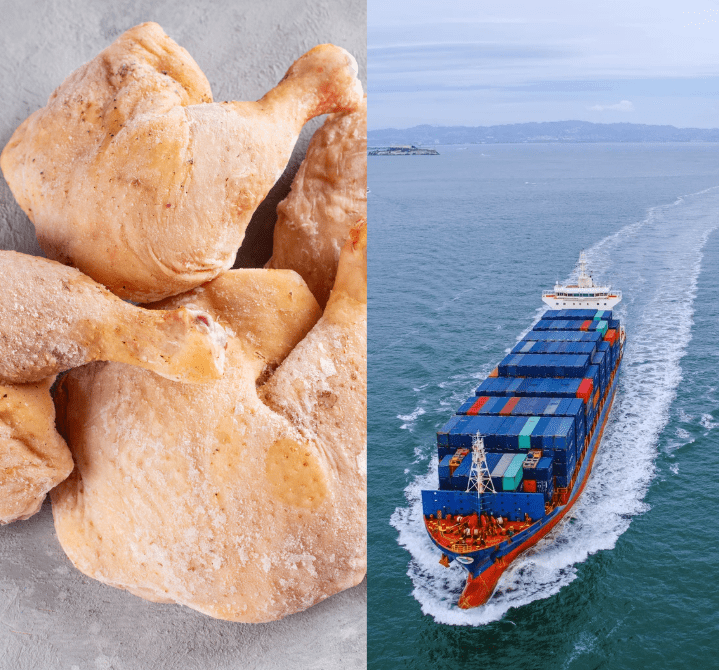
Chicken Imports in 2026: Separating Fact from Fiction
Recent commentary has once again raised concerns about a supposed “surge” in poultry imports into South Africa. While headline figures may suggest a sharp increase early in 2026, a closer look at the data tells a very different story, one that challenges the narrative being promoted.
A Surge in Context
Yes, imports of bone-in chicken cuts increased in January and February 2026 compared to the same period in 2025. However, percentage increases off a low base can be misleading.
When placed in proper context, even if current import levels were to continue for the remainder of the year, total bone-in imports for 2026 would amount to approximately 58,000 tonnes—representing less than 3% of South Africa’s total poultry consumption (based on the latest available 2024 consumption data).
This is not an “onslaught.” It is a marginal component of a much larger, predominantly locally supplied market.
The Long-Term Trend Matters More
Focusing on short-term fluctuations ignores the broader structural reality of the South African poultry sector.
Over the past decade:
- Local production has increased by approximately 12%
- Imports have declined from around 24% of consumption in 2018 to approximately 15% by 2024
These figures point to a sector that has grown stronger and more competitive over time, not one under threat from imports.
Debunking the “Dumping” Narrative
Claims that the current increase reflects “dumped” chicken imports are not supported by the regulatory environment.
South Africa maintains:
- Anti-dumping duties on key poultry products
- Most Favoured Nation (MFN) tariffs
- Additional safeguard measures introduced in recent years
Together, these measures make South Africa one of the more protected poultry markets globally. The suggestion that large volumes of unfairly priced imports are entering unchecked simply does not align with the facts.
A More Important Conversation: Competitiveness and Growth
According to insights from the Bureau for Food and Agricultural Policy (BFAP), South Africa’s poultry industry has become increasingly competitive, now ranking among the most efficient producers globally, second only to Brazil.
The real challenge facing the sector is not imports, but growth.
As domestic demand becomes constrained by consumer spending pressure, the pathway for further expansion lies in:
- Export market development
- Global competitiveness
- Strategic positioning beyond the domestic market
This requires a shift in focus, from defending market share to expanding opportunity.
Competition Within the Industry
There is also a broader structural issue that warrants attention: the accessibility and inclusivity of the poultry sector itself.
Emerging producers continue to face:
- High input costs
- Regulatory compliance burdens
- Uneven competitive conditions
At the same time, informal or unregulated operators are often able to bypass these constraints, creating further imbalance.
This raises an important question: Is the current structure of the industry enabling fair and inclusive competition?
Why Imports Still Matter
For South African consumers, poultry remains the most affordable and accessible source of protein.
Imports play a critical supporting role by:
- Stabilising supply
- Preventing price volatility
- Ensuring access for lower-income households
In a country where food security remains a priority, maintaining a balanced system that includes both local production and imports is essential.
A Balanced View
South Africa does not face an import crisis.
What it faces is a need to:
- Strengthen competitiveness
- Enable inclusive industry growth
- Unlock export potential
- Maintain affordability for consumers
Imports are not the problem, they are part of the solution. The poultry sector is a central pillar of South Africa’s food security because it remains the most affordable and accessible source of animal protein for a nutritionally vulnerable population.
Trade policies should therefore be guided by consumer interests, ensuring that the industry remains competitive, inclusive, and stable when market disruptions emerge.