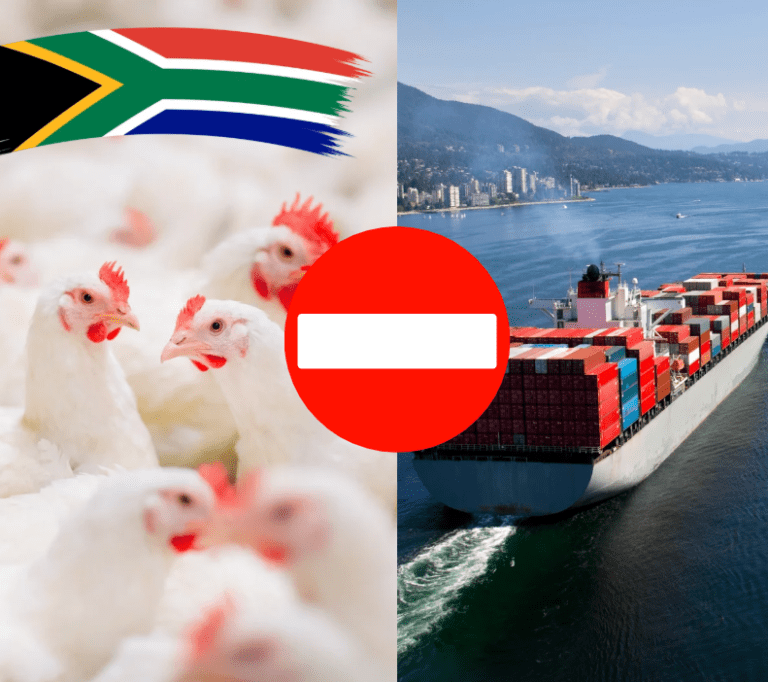
It is widely recognised by now that South Africa is on the brink of an economic and food security crisis following the blanket ban on Brazilian poultry imports due to a localised outbreak of avian influenza (AI).
Brazil has been a central supplier of mechanically deboned meat (MDM) and other vital poultry products to South Africa, filling the bulk of the supply gap that local poultry producers are unable to fill.
MDM caters for the production of affordable processed meats including polony, viennas and sausages.
The initial market response has resulted in mechanically deboned meat (MDM) prices increasing from R13 to R31/kg, while chicken offals have seen double-digit increases.
The absence of access to the MDM and offals product category has significant economic repercussions for South African importers, retailers, and informal traders.
Furthermore, the four-to-six-week supply gap could leave meat processors idle for over 60 days, potentially leading to significant job losses.
International trade law expert, Gustav Brink, underscores the long-term consequences of South Africa’s blanket ban approach:
“If other nations were to adopt South Africa’s approach, it would effectively remove one of the world’s largest poultry producers, leading to widespread shortages. This would result in a significant surge in international prices, inevitably driving domestic producers to elevate their prices as well,” Brink explains.
“You’re probably looking at anything from a 10 to 20% increase in prices for all poultry products, not just for MDM,” Brink adds.
Brink further highlights South Africa’s track-record with lifting import bans. “We’ve had many cases where a country can show that they have cleared the AI outbreak and have the necessary veterinary certificates. South Africa then takes up to two years to remove the ban. You typically should remove that ban within a maximum of 60 to 90 days. We’re lucky if we get that removed within six to nine months.”
The South African Poultry Association (SAPA) and its members lack the production capacity to bridge the supply gap quickly. “They won’t be able to step in within a week, a month, or even three months—it takes time to build up stock,” Brink warns.
“The result is prolonged shortages of MDM, offal, and frozen bone-in cuts, lasting at least six months,” Brink concludes.
A Threat to Food Security and Market Stability
Animal health scientist, Thabo Nkabinde, reinforces the broader implications for South African consumers.
Poultry remains a staple protein source, especially for low-income households, meaning price hikes and supply instability could lead to severe food security challenges.
“The supply shock is inevitable because South Africa does not produce enough poultry to meet demand,” Nkabinde states.
This price volatility will push inflation, disproportionately affecting consumers in vulnerable economic segments.
Additionally, the instability disrupts downstream industries, affecting businesses dependent on stable poultry pricing.
Adopting a One Health Approach: A Balanced Solution
Nkabinde advocates for a One Health approach, which integrates public health, economic stability, and food security into policymaking.
He asserts that South Africa must align its sanitary and phytosanitary (SPS) protocols with global standards, including sanitary guidelines, Codex Alimentaria food safety regulations, and World Organisation for Animal Health (WOAH) policies.
One of the biggest challenges lies in South Africa’s governance of biosecurity functions. “With the Department of Agriculture, Land Reform, and Rural Development (DALRRD) shifting biosecurity oversight to the Border Management Authority, the decision-making has become detached from scientific expertise,” Nkabinde observes.
This shift increases reliance on bans rather than scientific risk assessments, exacerbating trade disruptions.
The proposed alternative is a regionalisation agreement, wherein South Africa lifts bans on unaffected regions while maintaining vigilance on infected zones.
Nkabinde asserts that this model ensures supply continuity while preserving biosecurity integrity.
Collaborative Investment in Poultry Stability
To mitigate future crises, Nkabinde suggests public-private partnerships to bolster local vaccine production, strengthen surveillance networks, and improve biosecurity infrastructure such as laboratories and traceability tools.
Policy reforms could also include:
- Removing VAT on poultry meat to maintain affordability for consumers.
- Pro-poor policy design that subsidises essential poultry products.
- Maintaining buffer stocks to shield vulnerable communities from prolonged shortages.
These efforts would not only secure South Africa’s food supply but also position the country as a more scientifically driven and globally trusted trade partner.
Conclusion
South Africa’s current SPS policy threatens food security, economic stability, and international trade relations.
Experts argue that adopting WTO-aligned regionalisation will prevent drastic price inflation, ensure poultry availability, and fortify supply chains.
By integrating biosecurity with trade policy through a One Health framework, South Africa can avoid unnecessary bans, streamline disease monitoring, and maintain market resilience, securing a more stable food system for the future.