No modern economy can meet all its food needs through domestic production alone. Even countries with strong agricultural sectors rely on imports to close nutritional gaps, stabilise prices, diversify supply, and protect consumers from shocks.
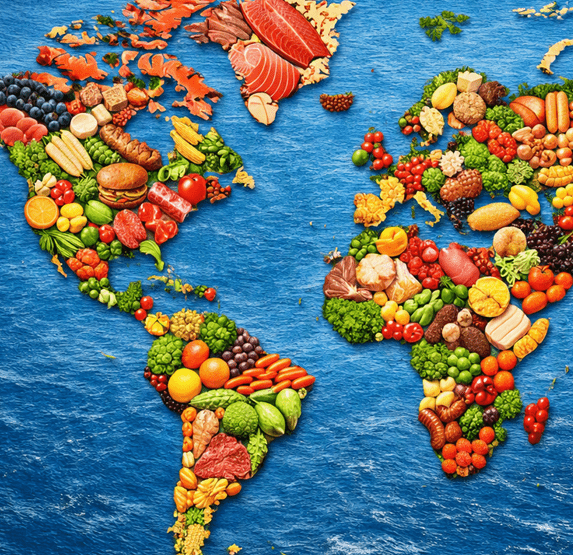
A landmark global analysis published in Nature Food examined 186 countries across essential food categories and found that only Guyana produces enough domestically to cover all seven nutritional food groups without imports. Over a third of nations cannot manage more than two groups independently.
Food security is strongest when local production and imports work together, supported by fair, rules‑based trade rather than protectionism that restricts supply and raises costs.
This article explains why self‑sufficiency is impossible, how global trade supports food security, and why a balanced approach between local production and imports ultimately benefits consumers.
Countries cannot produce all food groups domestically
Global data shows that only Guyana, a South American country, is fully self‑sufficient across all major food groups, while over one‑third of countries can meet dietary requirements for only two or fewer food groups.
Most countries cannot produce enough staples, legumes, fruits, or vegetables to meet nutritional needs. Only one in four countries produces enough vegetables for a healthy diet.
This is due to:
- Climate limitations (temperature, rainfall, seasonality)
- Soil constraints (nutrient levels, arable land availability)
- Water scarcity
- Crop suitability (some foods simply cannot be grown competitively in certain regions)
Even highly productive agricultural nations rely on imports to fill gaps in nutrition, affordability, and year‑round availability.
Diversified imports strengthen resilience
World Bank trade analysis shows that import diversification is directly linked to nutrition resilience.
Countries that import from a wide range of partners are better protected from global shocks, while low‑income and fragile states relying on one or two suppliers face steep risks.
This is particularly true for nutrient‑dense foods such as pulses, fruits, and vegetables.
The Role of Imports in Food Security
Imports fill structural supply gaps
South Africa is a clear example: despite being a major agricultural producer, it does not produce enough chicken to meet domestic demand, and imports consistently fill a 20% supply gap.
Imports also support:
- Processed meat manufacturing, which sustains around 125,000 jobs
- Affordable protein access, especially for low‑income households
Imports stabilise supply during shocks
When Brazil, South Africa’s largest poultry supplier, faced a temporary HPAI‑related export ban in 2025, South Africa experienced:
- In June, a 52% decline in chicken imports (excluding MDM), and a 66% decline in July
- In June, a 47% decline in MDM imports, and a 67% decline in July
This led to price spikes in low‑cost protein products and placed major pressure on processed meat manufacturers, resulting in idle factories and lay-offs.
The disruption demonstrated that over‑reliance on a single supplier is a food security risk, and diversified import channels are essential.
Imports support affordability
Global freight costs, exchange‑rate volatility, and disease‑related disruptions continue to influence South Africa’s poultry prices.
Imports help buffer these pressures by providing alternative supply when local production is constrained, preventing excessive price increases, and ensuring consistent availability of essential inputs like MDM.
The Role of Local Production in Food Security
Domestic production provides stability and employment
Local poultry farming directly employs approximately 50,000 people, while downstream processing employs around 125,000.
Local production:
- Ensures baseline supply
- Supports rural economies
- Reduces vulnerability to global logistics disruptions
- Provides fresh products that cannot be imported competitively
Domestic production cannot meet total demand
Even with strong production growth, such as the USDA‑projected 2% increase in South African chicken production in 2026, local output still falls short of consumption needs.
Consumption is expected to reach 1.92 million tonnes, while production is only 1.68 million tonnes, leaving a structural gap that imports must fill.
Protectionism: Risks and Realities
Protectionism raises consumer prices
Tariffs, anti‑dumping duties, and import restrictions can protect local industries, but simultaneously:
- Reduce supply
- Increase prices
- Limit consumer choice
- Increase vulnerability to local production shocks
South Africa’s poultry imports have already been constrained by tariffs and anti‑dumping duties, contributing to higher landed costs and price pressure.
Protectionism can destabilise food security
When imports are restricted:
- Supply gaps widen
- Low‑income households face affordability challenges
- Informal traders lose access to essential products
- Processors struggle to secure raw materials
The 2025 Brazil disruption showed that restricting imports without diversified alternatives exposes the entire value chain to risk.
Balanced protection is essential
Protectionism is not inherently harmful. Targeted, evidence‑based measures can prevent unfair trade practices such as dumping. But excessive protectionism harms consumers.
A balanced approach includes:
- Allowing competitive imports to fill gaps
- Supporting local producers through investment, not blanket tariffs
- Ensuring diversified import sources
- Maintaining regionalisation agreements to prevent full‑country bans during disease outbreaks
How a Balanced System Benefits Consumers
More stable prices. A mix of local production and imports ensures:
- Competition
- Price moderation
- Supply continuity
- Reduced volatility during shocks
Better nutrition
Imports provide access to food groups that cannot be produced locally in sufficient quantities, especially fruits, vegetables, pulses, and affordable proteins.
Stronger industry and employment
Local production supports jobs, while imports support processing, retail, and logistics sectors. Together, they create a more resilient food system.
Greater resilience to global shocks
Diversified import portfolios protect countries from, disease outbreaks, climate shocks, port congestion, and geopolitical disruptions.
No country can be fully self‑sufficient and attempting to be is both unrealistic and harmful to consumers. Food security depends on a strategic balance: local production for stability, employment, and baseline supply, and imports for affordability, diversity, and resilience.
Protectionism must be carefully calibrated to prevent unfair trade practices without restricting essential supply.
Ultimately, a balanced, diversified, and open food system is the only model that protects consumers, supports industry, and ensures long‑term national food security.