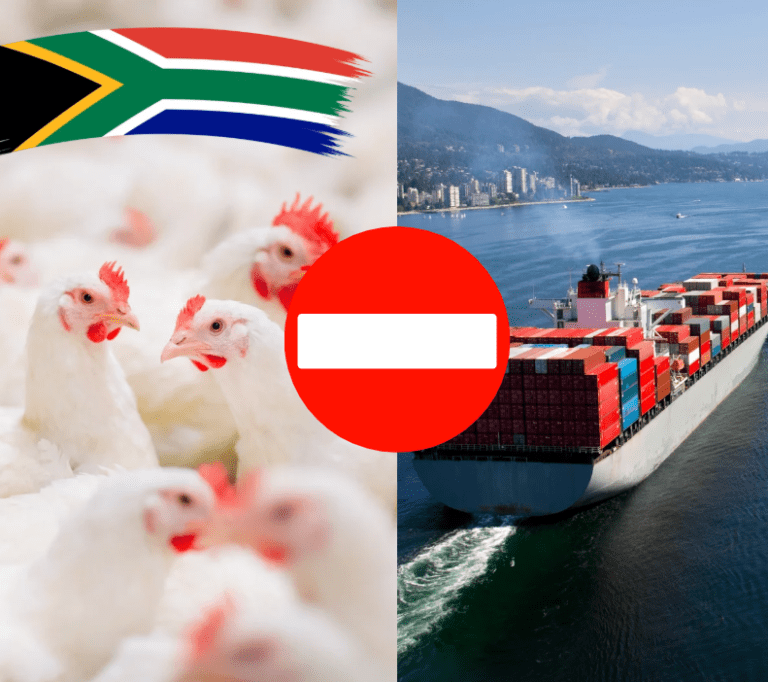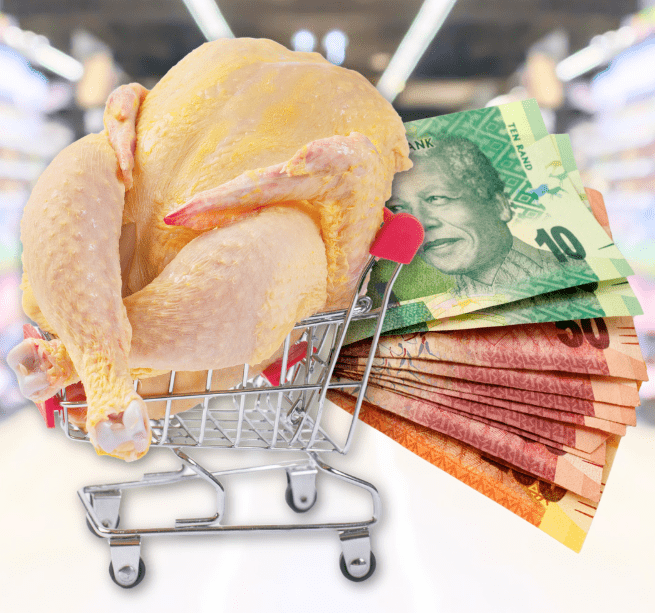
Francois Baird’s column congratulates himself on a decade of anti-dumping tariffs that have kept imported chicken out of South African shops. He forgets to mention who has paid for that decade: the millions of South African households for whom frozen chicken portions are the cheapest source of animal protein they can buy.
Baird’s own figures are the best evidence against his case. When provisional duties lapsed for eight months in 2022, he says frozen portion prices ended up 6.3% higher than before the duties applied and presents this as proof that tariffs don’t drive prices. But correlation is not causation: that period also saw the worst avian flu outbreak in the country’s history, a weak rand, and feed costs, which he correctly notes make up 70% of production cost, spiking globally.
Attributing a price rise entirely to eight tariff-free months, while ignoring a R9 billion cull and a global grain shock, has been reframed as an incomplete interpretation rather than “advocacy dressed up as data”.
More importantly, those eight months were not a period of tariff-free chicken imports. Even after the anti-dumping duties were suspended in 2022, general Most-Favoured-Nation (MFN) duties remained in place. Bone-in chicken continued to attract a tariff of 62%, while chicken offal remained subject to a 30% duty.
In other words, the comparison Baird presents as evidence from a period of “tariff-free” imports was, in fact, a period in which substantial tariff protection remained. That distinction matters when assessing what effect the removal of anti-dumping duties actually had on import competition and consumer prices.
Then there is the central inconsistency at the heart of his argument. Baird wants government to keep the tariff wall up and scrap VAT on chicken to protect the industry from competition, then also ask the fiscus to forgo revenue to bring prices down. If tariffs really built “the world’s second most competitive poultry industry,” as he claims, that industry should be able to compete on price without either prop.
This doesn’t address the core food security question: what a poor household pays at the till for a kilogram of protein, rather than what happens to a producer’s margin. South Africa’s anti-dumping duties on chicken from Brazil, the US, and elsewhere have kept import competition largely out of this market for the better part of a decade. If the policy Baird champions has worked as he describes, it is reasonable to ask why affordability remains a persistent challenge rather than a resolved one.
It is also worth asking who benefits from that policy being defended so vigorously, and from where. FairPlay campaigns against foreign interests distorting the South African chicken market, yet its founder runs the campaign out of Washington DC. South Africans who cannot afford chicken this month are entitled to wonder whether “fair play” is representing affordable chicken and jobs, or that of the domestic producers who fund the campaign.
Government should look past both the tariff lobby and the import lobby and ask a simpler question: what actually gets protein onto poor people’s plates at a price they can afford? A decade of tariffs has not answered that question. It’s time someone did.