South Africa’s Foot and Mouth Disease response continues to face operational and trust related challenges. Farmers report persistent infections, uncertainty around booster schedules and growing frustration with the state’s crisis management.
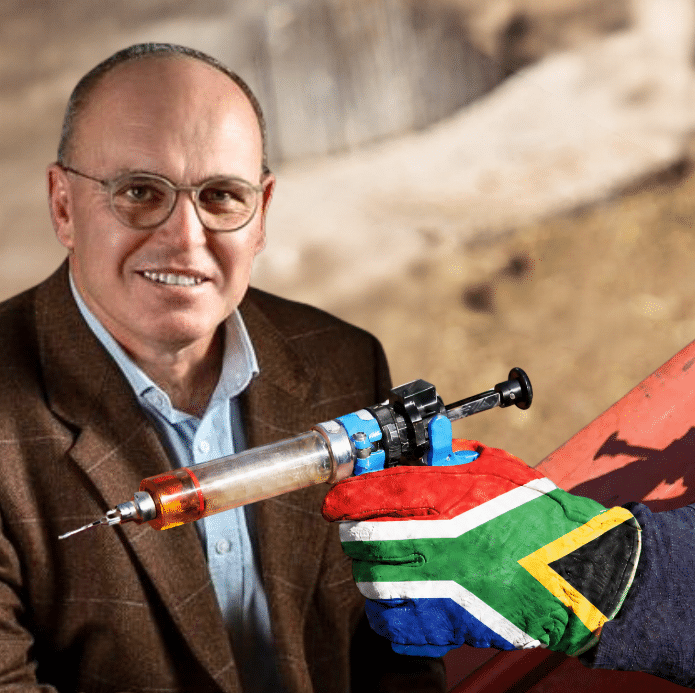
In a recent discussion, livestock industry leader, Johann Kotzé, shared candid views on why the country may need to rethink its approach.
Losing Focus on the Virus
Kotzé believes the national conversation has drifted away from the core issue. In his words, “We started to focus so much on each other that we missed the opportunity to fight the virus.”
He notes that political controversies, including the suspension of OBP’s CEO over alleged irregular pricing, have pulled attention toward institutional failures instead of containment. “There is a focus on what went wrong, and we are not fighting the virus itself,” he said.
Why Compulsory Vaccination Matters
Kotzé is clear that South Africa will not overcome FMD without a unified national vaccination plan. “You can only overcome this virus when it is compulsory to vaccinate,” he explained.
He believes government must fund the initial phase to create a blanket national approach. Once viral pressure drops, the private sector could gradually take over. “The private sector then says, I want to pay for the vaccines, because the virus has been pressed down and we are not affected anymore.”
However, he warns that current indications suggest compulsory vaccination may not be implemented. “If it is not going to happen, then what is the alternative? That is what we need to talk about.”
The Danger of Fragmented Farmer Responses
Kotzé cautions that mistrust and frustration can lead farmers to act independently. “Even good people start to do their own thing,” he said. This includes informal animal movements and improvised disease control practices that unintentionally support viral spread.
He emphasises that FMD does not discriminate. “The virus cannot read. It does not care if you are a large or a small farmer. It looks for the place of least resistance.”
Transparency and Operational Gaps
Farmers report uncertainty around booster timelines and vaccine audits. Kotzé stresses that clear communication is essential. “Farmers do not know when the boosters are coming. There have not been any audits on the vaccines,” he noted.
He acknowledges the complexity of the outbreak and the financial strain on the state. “To have a budget to do this is extraordinary. The Minister took it out of his own budget. You can do it up to a point and then no more.”
Even so, he believes the sector must confront reality directly. “We need to get to a point where we say, what is reality, where are we today, and what can we do with what we have.”
Defining a Clear Way Forward
Kotzé believes South Africa can still overcome FMD, even if the timeline is longer than expected. “We would be able to overcome it, maybe at a longer period of time, differently from what we thought in the past, but not giving up.”
He calls for a clear national plan that outlines whether South Africa will pursue a blanket vaccination model or a different approach entirely. “If it is a different approach, what will it be, and how can we restructure ourselves as farmers in South Africa?”
Cross Sector Implications for Animal Protein
Although FMD does not infect poultry, Kotzé highlights that its effects ripple across all animal protein industries. “Whatever affects cattle spills over to the chicken industry, just by the way people think and anticipate what might come next.”
He believes open dialogue between sectors is essential for future disease preparedness. “We might have a new disease that we never knew about. How do we tackle it? Through open discussions and relationships.”
Johann Kotzé’s perspective highlights a central challenge in South Africa’s FMD response: the absence of a compulsory, state funded vaccination strategy that covers the entire country.
Without clarity, farmers risk becoming fragmented in their approach, creating openings for viral spread. Kotzé calls for transparency, realistic planning and a unified national strategy that aligns both government and producers.
South Africa may still overcome FMD, but only if the sector confronts current realities and commits to a coordinated path forward.